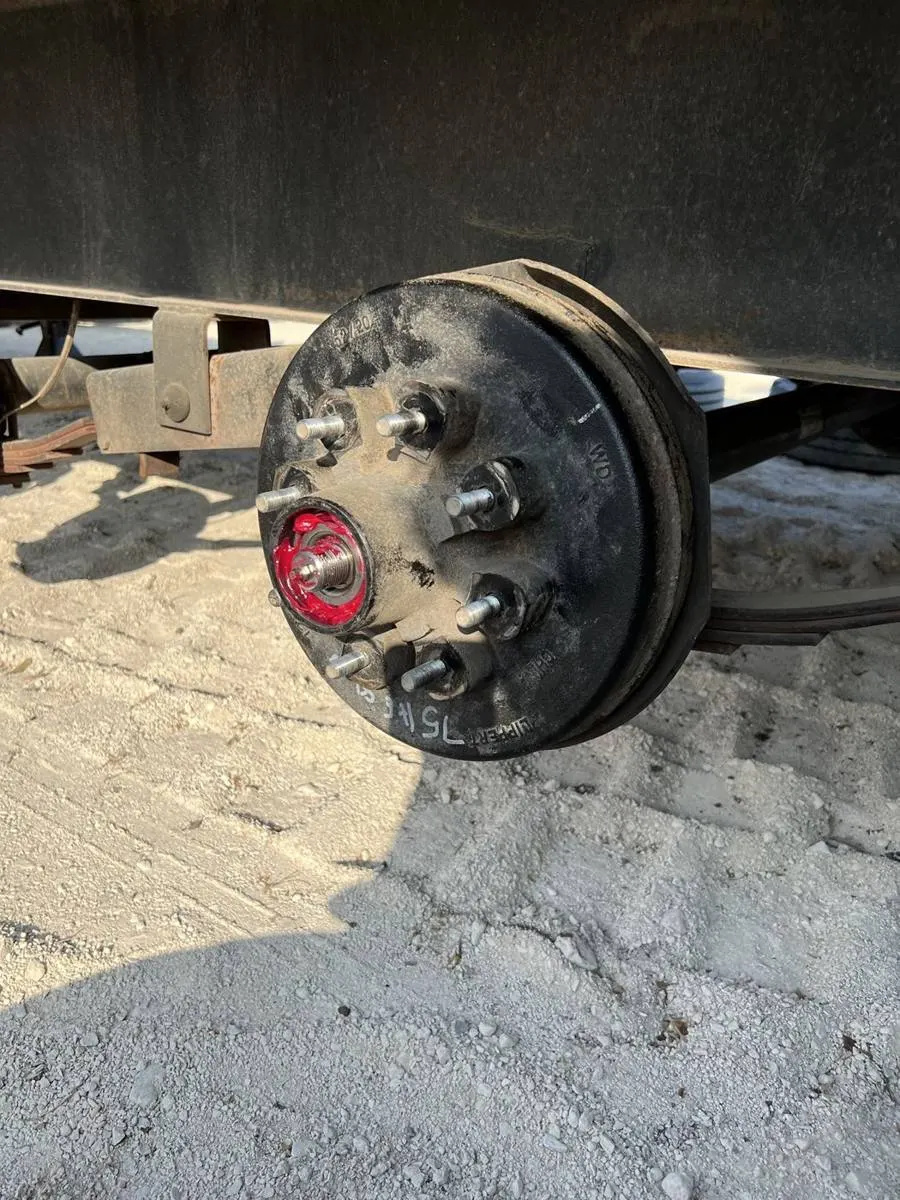
Signs the drum is worn out
- Deep grooves or scoring from worn-out brake shoes or metal-on-metal contact
- Cracks or heavy heat-checking (lots of fine cracks) from overheating
- Out-of-round drums, which cause a pulsing feel or uneven braking
- Worn past the maximum diameter stamped on the drum
- Blue or discolored spots from serious overheating
Signs the hub is damaged
- Bearing races that are pitted, spun or loose in the hub
- Damage from a bearing that seized or overheated
- Stripped or broken wheel studs
- Cracks in the hub casting
Why a failed bearing often means a new hub
When a wheel bearing runs dry and overheats, it can damage the race inside the hub — and sometimes the spindle too. Putting a new bearing into a damaged hub won't last. That's why catching bearing problems early is the best way to avoid a hub and drum replacement.
Repair or replace?
Some drums can be measured and kept if they're within spec and not cracked. But on many trailers, especially utility, hotshot and equipment trailers with combined hub-and-drum assemblies, a complete new hub and drum is the most reliable fix and often costs about the same as repairing the old parts.
What a hub and drum job includes
- Removing the old hub and drum and inspecting the spindle
- Installing a new hub and drum with new bearings, races and seals
- Packing the bearings with fresh grease
- Inspecting the brake shoes, magnets or chambers and replacing worn parts
- Adjusting the bearings and brakes correctly
Do both sides: brakes work best in pairs. If one side's drum and shoes are replaced, it's often smart to do the other side of the axle too so the trailer brakes evenly.
You can see a real hub and drum install in our work gallery.
Service page: Hubs, bearings & seals in Houston
More trailer repair guides · All services · ZIP codes we serve