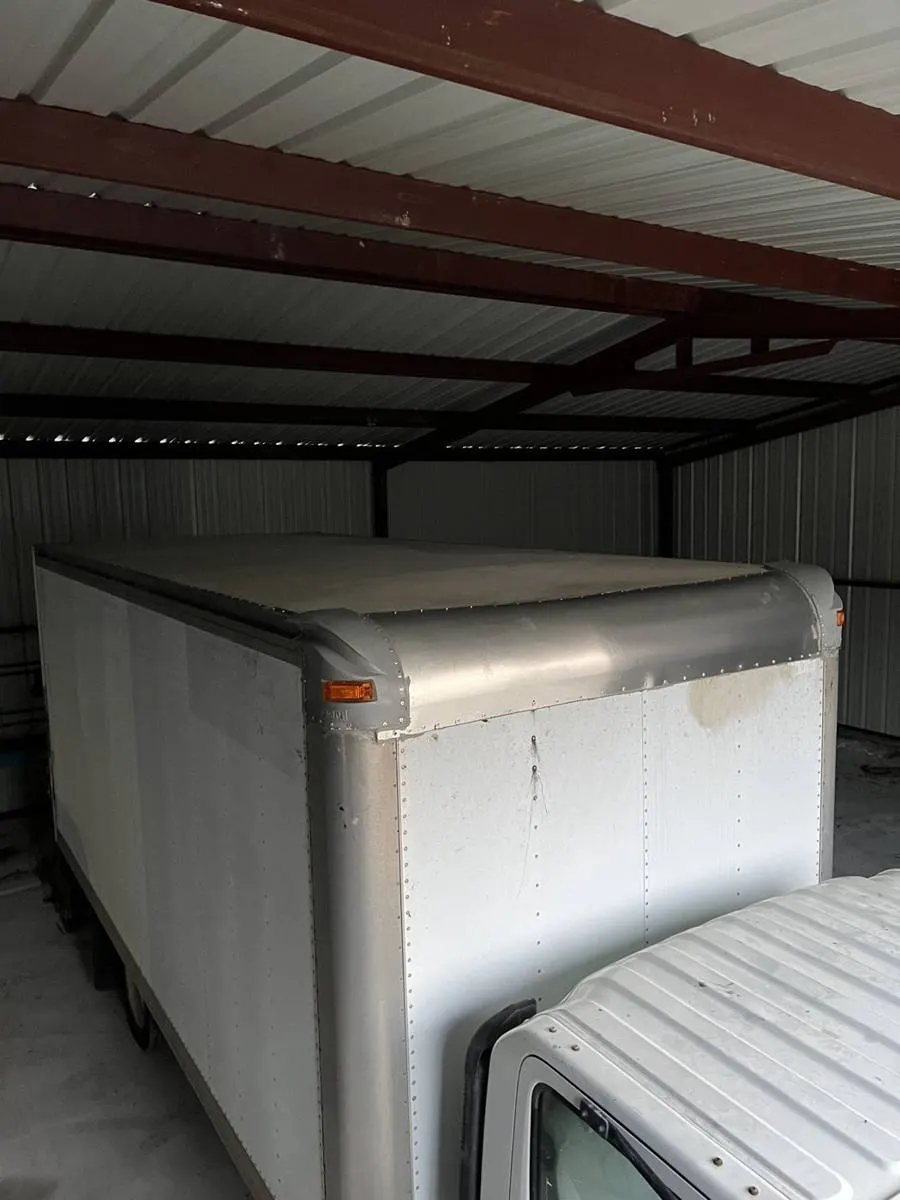
Finding the leak
Water rarely drips straight down from where it gets in. Look for daylight from inside the box with the doors closed, check for water stains on the walls and floor, and look up at the roof edges, seams and corners. Common spots are around the front corner caps, the rear header, rivet lines and anywhere the roof was hit.
When a patch is enough
- Small punctures or tears in an otherwise solid roof
- A single damaged area, like one spot hit by a branch
- Leaks at a seam or along loose rivets
- Roof bows (the supports underneath) are straight and not damaged
A proper patch uses matching aluminum or fiberglass material, overlaps solid roof on all sides, and gets riveted and sealed. Done right, a patch lasts for years.
When replacing the roof skin makes more sense
- Large tears or the roof peeled back after hitting something
- Lots of old patches that keep leaking
- Roof material that's brittle, cracked or corroded across a wide area
- Bent or broken roof bows that need to be straightened or replaced
A new roof skin costs more up front, but it stops the cycle of leaks, ruined cargo and floor damage.
Don't forget what's under the roof
If water has been getting in for a while, check the floor boards and the bottom of the side walls. Soft, dark or swollen wood should be replaced at the same time, or the floor can fail under a load.
Box truck body repairs we handle
- Roof patches and full roof skin replacement
- Aluminum and fiberglass side panel repair
- Corner cap replacement with new marker lights
- Loose rivets, open seams and resealing
- Roll-up and swing door repair and door seals
- Floor board replacement
Service page: Roof & skin repair in Houston
More trailer repair guides · All services · ZIP codes we serve