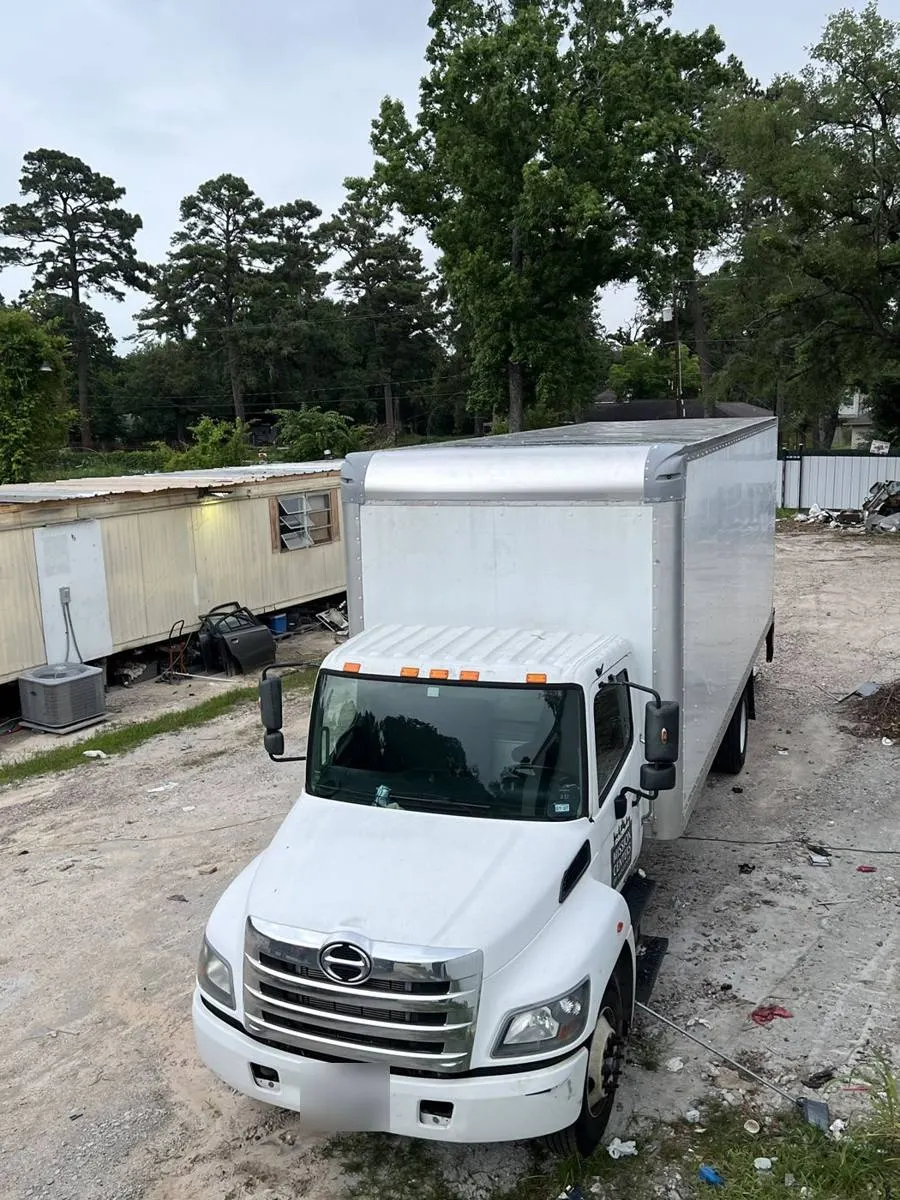
Aluminum skin repair
Aluminum is light and doesn't rust, but it dents and tears easily. Common repairs include:
- Patching holes and tears: a matching aluminum patch is cut to overlap solid metal, then riveted and sealed
- Re-riveting: replacing loose or popped rivets along posts and seams
- Panel section replacement: cutting out a badly damaged section and installing a new one
- Sealing seams: resealing joints that have opened up and started leaking
Aluminum can corrode where it touches steel, especially in humid places like Houston, so damaged areas around steel posts and fasteners should be cleaned and sealed properly.
Fiberglass skin repair
Fiberglass panels (often called FRP) are common on box trucks and some trailers. They're stiff and smooth, but they crack and delaminate when hit. Repairs include:
- Crack and hole repair: patching and bonding damaged areas
- Delamination: fixing panels where the layers have separated, often from water getting in
- Section replacement: replacing a damaged piece of panel and sealing the joints
Patch or replace the panel?
A patch is usually fine for punctures, small tears and isolated damage. Replacing a panel or section makes more sense when the damage is large, the panel is badly bent or delaminated, there are already several patches in the same area, or the posts behind it are damaged.
Why fix small damage right away
- Water gets in and ruins cargo and floors
- Torn edges catch wind and get bigger at highway speed
- Sharp edges can injure people and damage freight
- Damage looks bad to customers and shippers
See before-and-after body repairs in Our Work.
Service page: Roof & skin repair in Houston
More trailer repair guides · All services · ZIP codes we serve